
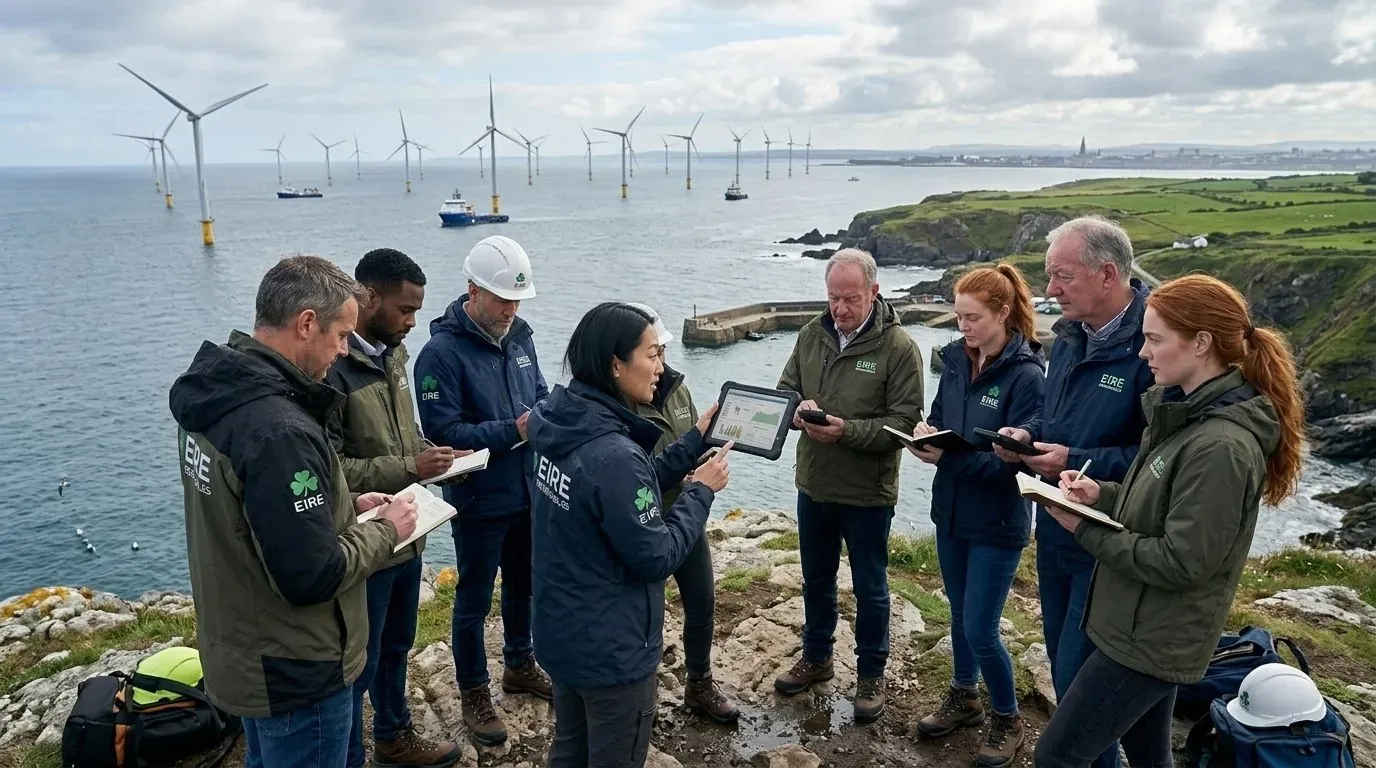
Ireland's green economy spans beyond field conservation into corporate boardrooms, financial hubs, and industrial engineering. Driven by European CSRD mandates and national climate targets, high-demand green roles are concentrated in ESG data auditing, offshore renewable logistics, circular supply chain management, and sustainable civil infrastructure across Dublin, Cork, and Limerick.
1. The Commercial Shift: Moving Beyond Corporate CSR Statements
Until recently, sustainability roles inside Irish organizations were largely advisory—often tucked away inside public relations or community affairs departments.
In 2026, the landscape has changed entirely. Backed by stringent European Union Corporate Sustainability Reporting Directives (CSRD) and statutory guidelines issued by the national sustainable energy authority (SEAI), sustainability is now a core compliance, legal, and operational priority for Irish business.
Firms can no longer publish vague climate pledges. Every supply chain footprint, carbon offset, and energy efficiency metric requires auditable proof. Consequently, Irish enterprises across high-demand employment sectors face a shortfall of specialists capable of translating complex environmental targets into balance-sheet realities.
For organizations building long-term talent resilience, companies can partner on green-skills programs to access multidisciplinary international professionals already living in Ireland.
2. The Anatomy of Emerging Green Careers in Ireland
The modern green economy does not require every candidate to hold an environmental biology degree. In reality, the steepest hiring growth occurs at the intersection of traditional business functions and sustainability frameworks:
- ESG Data & Regulatory Reporting: Financial analysts, accountants, and legal specialists who understand EU Taxonomy, double-materiality assessments, and SFDR fund classifications.
- Renewable Infrastructure & Offshore Energy: Civil, mechanical, and electrical engineers specializing in grid connection, port infrastructure, and offshore wind logistics—particularly in Munster as highlighted in our market report on why Cork is becoming an international career hub.
- Circular Supply Chain & Waste Auditing: Operations managers who redesign manufacturing inputs, eliminate single-use packaging, and implement reverse logistics in biopharma and food production.
3. High-Growth Green Career Pathways (2026 Data Matrix)
- Corporate ESG Compliance — High-Demand Roles: CSRD Reporting Lead, ESG Auditor; Core Required Competencies: GHG Protocol, EU Taxonomy, Audit
- Clean Energy Systems — High-Demand Roles: Grid Connection Specialist, Wind PM; Core Required Competencies: SCADA, HV Systems, Offshore Marine
- Sustainable Operations — High-Demand Roles: Life-Cycle Assessment (LCA) Analyst; Core Required Competencies: ISO 14040/44, Supply Chain Mapping
- Sustainable Finance — High-Demand Roles: Green Bond Structurer, Risk Analyst; Core Required Competencies: SFDR, ESG Due Diligence, Portfolio
4. How International Professionals Can Bridge into Green Roles
A significant advantage for arriving international talent is that global sustainability frameworks are largely standardized across borders. The Greenhouse Gas Protocol, ISO standards, and life-cycle analytics operate under universal principles.
To position your international background for an Irish green-economy vacancy:
- Map Your Transferable Base: If your background is in financial accounting, pivot toward carbon accounting. If you managed warehouse logistics, emphasize energy-efficiency metrics and waste reduction protocols.
- Translate Your Metrics: Ensure your Irish-style CV format reflects specific European directives rather than generic environmental statements.
- Practice Context-Driven Communication: Frame sustainability initiatives not as punitive corporate restrictions, but as collaborative commercial opportunities, respecting the consensus dynamics of navigating Irish workplace culture and Irish business communication.
Aligning verified technical capabilities with regional industrial transitions is the most dependable path to professional integration in Ireland.
5. Frequently Asked Questions (FAQ)
What are the fastest-growing green jobs in Ireland in 2026?
The highest demand is for ESG compliance analysts, carbon accountants, offshore wind engineers, and circular supply chain specialists across Dublin and regional hubs.
Do I need an environmental science degree to work in Ireland's green economy?
No. Most expanding roles seek professionals with backgrounds in data analytics, finance, law, engineering, and logistics who have upskilled in recognized sustainability frameworks.
Which regions in Ireland offer the most green economy jobs?
Dublin serves as the hub for sustainable finance and corporate ESG compliance, while Cork and Limerick lead in renewable energy logistics, maritime engineering, and industrial decarbonization.
Anchor Your Career in Ireland's Sustainable Future
The green transition offers a generational opportunity to align professional expertise with meaningful societal impact.
- Audit your skills: Take the Confidence Compass to measure your profile against active Irish sustainability benchmarks.
- For employers and partners: Learn how your organization can partner on green-skills programs with Domhan Green Society.
- Explore verified roles: Browse open opportunities in renewable engineering and ESG on our External Opportunities directory.